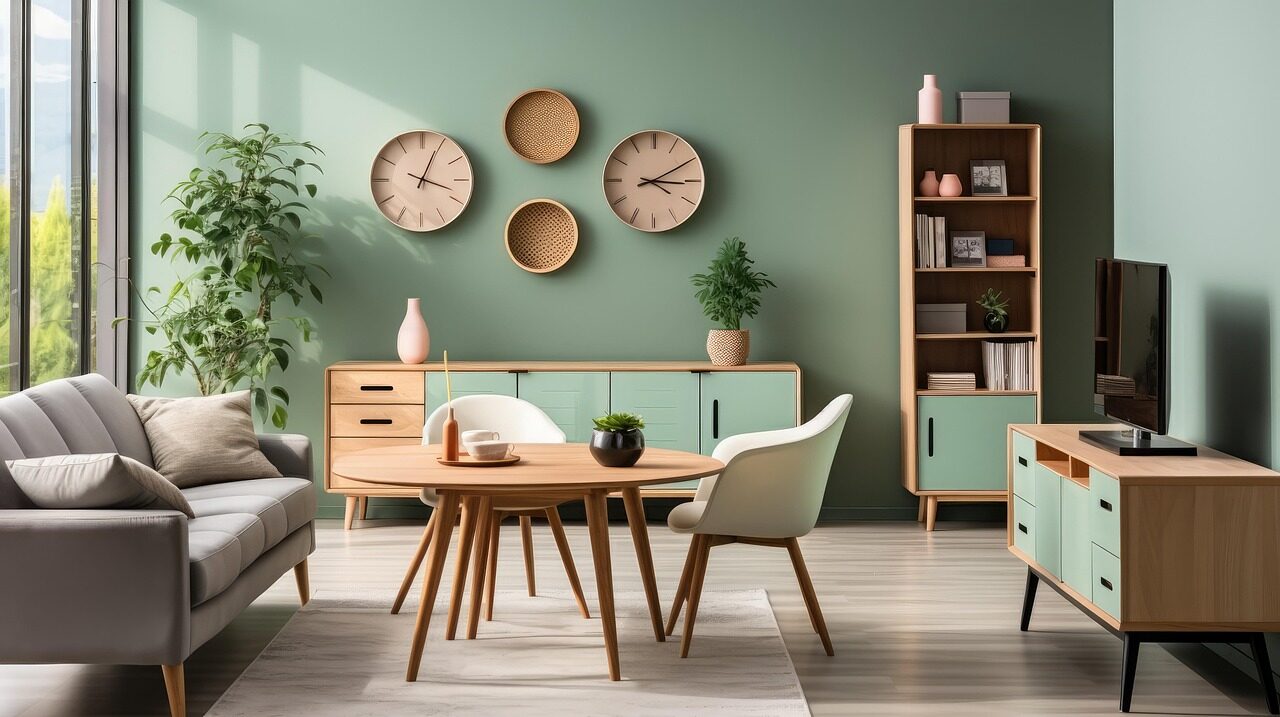
How to Choose the Right Size Wall Clock
Try it on your wall: Compare clock sizes with our free Clock Sizing Tool.
The right wall clock should be easy to read and feel comfortable in its surroundings. Start with the wall and the furniture beneath it, then test the size before ordering. A clock that looks perfect in a close-up product photo may feel very different across a living room.
Measure the space you actually want to fill
Measure the clear wall area between nearby windows, shelves, doorways, and other decorations. If the clock will hang over a sideboard, sofa, or mantel, measure that furniture too. Leave room around the clock so its outline remains distinct.
There is no mandatory clock-to-furniture ratio. Treat proportions as a design choice. A smaller clock can become part of a group of pictures; a larger clock can serve as the main feature. Avoid buying a large clock simply because the wall itself is large: the surrounding objects and your viewing position matter just as much.
Try a full-size paper template
Cut or tape paper into the clock’s advertised outside dimensions. For a round clock, include its frame rather than measuring only the dial. Fix the template temporarily with a wall-safe method, then look at it from the doorway and your usual seating position.
- Does it crowd a shelf, curtain, or ceiling line?
- Does it look balanced above the furniture?
- Can you reach it for battery changes without an awkward stretch?
- Will a nearby door or cabinet interfere with it?
Compare two paper sizes if you are undecided. A quick photograph from across the room can help you see the arrangement as a whole.
Check the dial, not just the diameter
A large outside measurement does not guarantee an easy-to-read clock. A wide decorative frame can leave a surprisingly small dial. Open-face designs may blend into the wall behind them. Look for hands and markings that stand out against the background, especially if you want to read the time from a sofa or kitchen table.
Think about your room’s lighting. Glass can reflect windows or lamps; elaborate lettering may look attractive nearby but be harder to read at a distance. Test the likely viewing angle rather than assuming the product photograph represents your room.
Match the size to the job
In a kitchen or workspace, legibility may matter more than making a statement. Above a fireplace or sideboard, the clock may also be a decorative focal point. In a gallery wall, choose its position alongside the other pieces before deciding on its size.
For a bedroom, consider the movement as well as the dimensions. A good-looking clock can still be distracting if you notice its ticking at night. Read our guide to silent and ticking clocks before choosing one for a quiet room.
Check the practical details before buying
Confirm the outside width, height, depth, weight, and hanging method. Use a fixing suitable for both the wall construction and the clock’s weight, following the clock and fixing manufacturers’ instructions. Above a fireplace, also follow the fireplace manufacturer’s clearance and heat guidance.
A simple buying checklist: measure, make a template, check the dial from your usual viewing distance, then confirm weight and mounting requirements. Those checks are more useful than choosing by diameter alone.
Browse our wall clock picks and compare their listed dimensions before choosing.
This is a planning guide, not a hands-on product review. Room proportions are suggestions, and individual product specifications should be checked with the retailer.