How to Choose a Rustic Wall Clock for Your Room
A rustic wall clock works best when it feels connected to the room around it. You do not need every piece of furniture to match, but a few shared colors, textures, or shapes can make the clock feel intentional. Begin with your room and the way you use it, then choose a design.
Choose the role of the clock
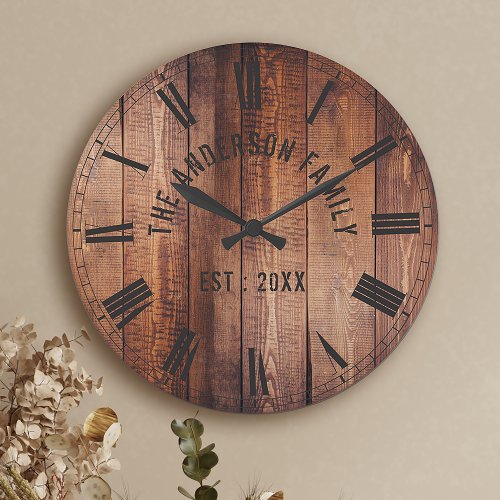
Decide whether you want a timepiece you can read at a glance, a decorative focal point, or both. Large distressed numerals can make a strong statement, while a simple dial may suit a room that already contains patterned fabrics and wall art.
If the clock is mostly decorative, still check that its hands stand out. A clock can look striking in a photograph and disappear against a similarly colored wall.
Look for connections with the room
Take cues from your existing furniture. A warm wood-look dial might echo a table or shelf. Dark hands or a metal rim can connect with curtain rods, lighting, or cabinet hardware. A pale face can bring contrast to a dark wall.
These are styling suggestions, not rules. You can mix wood tones without matching them exactly. Compare the overall warmth, darkness, and amount of visible grain rather than trying to find an identical finish.
Read the material description carefully
“Rustic wood” in a product title may describe the appearance rather than the construction. Check whether the face is solid wood, veneer, engineered wood, plastic, metal, or a printed design on another material. A photograph alone cannot reliably settle that question.
A printed wood pattern can be an affordable decorative choice. Solid wood may appeal if you want the material itself and accept natural variation. Neither description automatically establishes the movement quality, weight, or suitability for humid or outdoor locations.
- Check the stated material and finish.
- Look for close-up photographs of the edge and back.
- Confirm the weight and mounting hardware.
- Ask the seller if a vague description leaves an important question unanswered.
Test the scale before ordering
Use a paper template cut to the clock’s outside dimensions. Place it where the clock will hang and view it from the doorway and seating area. Leave enough space around the outline for the shape to be clear.
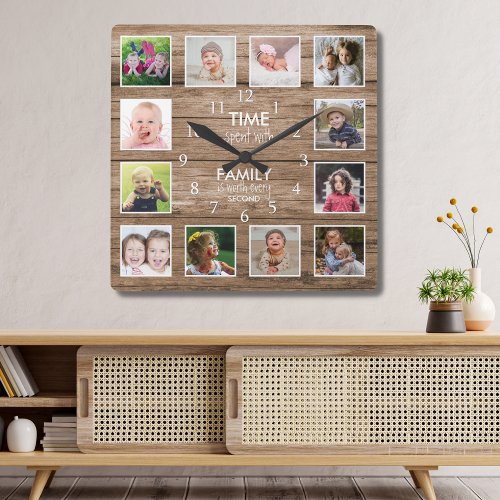
A large clock can anchor a simple wall. A smaller one may work better among framed photographs. Our wall clock sizing guide explains the measurement and template process in more detail.
Check the details you will live with
For a bedroom or reading space, confirm the movement’s sound description. For a kitchen, consider readability and whether the manufacturer provides cleaning guidance suitable for the location. For a patio or bathroom, do not assume a decorative indoor clock is appropriate: look for explicit environmental suitability.
Personalized clocks need an extra review. Check the spelling, date format, text placement, and preview before approving the order. Read the seller’s policy for customized products before paying.
Keep the surrounding arrangement simple
Before adding more decorations, try the clock by itself. If you build a grouping, give the clock enough visual separation that the hands and dial remain easy to find. Avoid placing decorations where they interfere with battery access or secure mounting.
Before you buy: confirm the material, dimensions, readable dial, movement, and mounting requirements. Those practical checks help a clock remain useful after the initial appeal of its style.
Browse wall clocks or explore personalized clock picks.
This article provides decorating suggestions and shopping checks. It does not claim firsthand testing of the products shown on the site.